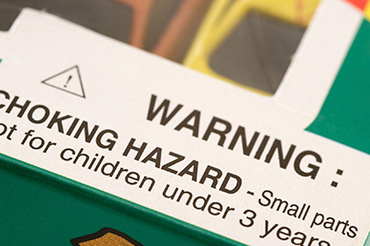
Choking & Strangulation

share

'Cinnamon Challenge,' Popular with Teens, Proves Risky | TIME

Apr 05, 2012

It’s a relatively simple dare, but teens are sending themselves to the hospital by attempting the “cinnamon challenge.”

The objective is to swallow a tablespoonful of cinnamon in under 60 seconds — a nearly impossible feat that causes contenders to gasp, spit and choke while attempting to keep the spice down. The game has gained popularity in the last few years, and as Newsfeed reported earlier this month, video after video of teens attempting the challenge are popping up on YouTube.

Top 5 Dangerous Objects Kids Like to Swallow | TIME

Mar 15, 2012

Kids swallow the darnedest things — including these commonly ingested dangerous objects.

To read the full article, visit:http://healthland.time.com/2012/03/07/top-5-dangerous-objects-kids-like-to-swallow/#magnets

Preventing Choking and Suffocation in Children | Canadian Paediatric Society

Mar 08, 2012

Choking, suffocation, and strangulation cause serious unintentional injuries in children and are leading causes of unintentional death in infants and toddlers. Nearly all choking, suffocation and strangulation deaths and injuries are preventable. The present statement reviews definitions, epidemiology and effective prevention strategies for these injuries. Recommendations that combine approaches for improving safety, including research, surveillance, legislation and standards, product design and education, are made.

Infant Deaths Prompt Baby Sling Recall

Dec 20, 2011

After at least three infants died of suffocation while being carried in Infantino “SlingRider” or “Wendy Bellissimo” baby slings, the San Diego-based company issued a recall of 1 million of the products in the U.S. and 15,000 throughout Canada. Earlier this month a spokeswoman for the U.S. Consumer Product Safety Commission (CPSC) told the Associated Press, “We know of too many deaths in these slings and we now know the hazard scenarios for very small babies… So, the time has come to alert parents and caregivers.”

CPSC Issues New Drawstring Safety Rule for Children's Outerwear -- Drawstrings at Neck and Waist Present Strangulation Hazard and Other Dangers: A CPSC press release

Jul 12, 2011

The U.S. Consumer Product Safety Commission (CPSC) approved a new federal safety rule for drawstrings in children's outerwear.

Drawstrings can catch or become entangled with objects, such as a car door or playground slide, posing dragging, strangulation, and entrapment hazards to children.

CPSC has received 26 reports of children who have died when the drawstring on their garment became entangled on playground slides, school bus doors, and other objects.
Waist and bottom drawstrings that have been caught in doors or other car parts have resulted in dragging incidents.

Unintentional Strangulation Deaths from "The Choking Game" Among Youths Aged 6 - 19 Years - United States, 1995-2007. Morbidity and Mortality Weekly Report 2008

Feb. 2008

Description

"The choking game" is a game caused by youths involving strangulation. This report describes the first attempt to assess the national incidence of deaths among youths resulting from the choking game.

Using Health Impact Assessment to Prevent Injuries in Oregon

Oregon’s Health Impact Assessment (HIA) Working Group

Oregon’s Health Impact Assessment (HIA) Working Group concluded that strategies to reduce the use of motor vehicles have the potential to prevent injuries from car collisions, including those to pedestrians and bicyclists.

In 2009, Governor Ted Kulongoski of Oregon proposed setting specific targets for automobile use in order to meet greenhouse gas emission goals already established in that state. Upstream Public Health, with funding from the Northwest Health Foundation, convened a workgroup to assess how strategies to reduce vehicle miles traveled (VMT) would affect the health of Oregonians.

Syndicate content