Drowning Prevention
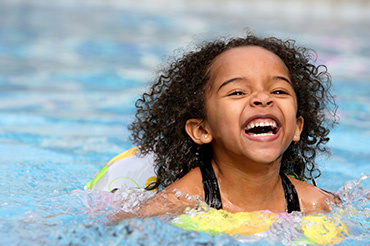
Definition: Drowning is a respiratory impairment caused by being submerged or immersed in water. Childhood drowning commonly occurs when a child is left unattended or during a brief lapse in attention (World Health Organization, 2023).
Magnitude of the Problem
According to 2017-2020 Centers for Disease Control and Prevention (CDC) WISQARS data:
- Unintentional drowning was the leading cause of death among children ages 1-4. For children ages 5-14, drowning was the second leading cause of unintentional death (after motor vehicle crashes).
- Approximately 900 children and adolescents ages 0-19 died from unintentional drowning each year. That is an average of 3 drowning deaths per day.
- American Indian/Alaska Native and Black children were significantly more likely to drown compared to White, Asian, or Hispanic children.
- Boys were more than twice as likely to drown compared to girls.
The highest risk locations for drowning vary by age. Among infants under 1 year old, two thirds of all drownings occur in bathtubs. Among children ages 1–4, most drownings happen in home swimming pools. About 40% of drownings among children ages 5-14 occur in natural water, and about 30% occur in swimming pools. More than half of fatal and nonfatal drownings among people 15 years and older occur in natural waters like lakes, rivers, or oceans (CDC, 2023).
Prevention
Some key recommendations to prevent drowning from the American Academy of Pediatrics (2020):
- Stay within an arm’s reach whenever your baby is near water.
- Make sure there is a “water watcher”- an attentive adult paying attention to children in the water.
- Immediately drain buckets, baths, and wading pools after each use.
- Install a fence around home pools that is at least four feet tall, non-climbable, and has a self-latching, self-closing gate.
- On a boat, everyone should be wearing a life jacket.
- Swimming lessons for caregivers and children can help prevent drowning. CPR training is also recommended.
- Protect your teen by making sure that they:
- Never swim alone.
- Choose safe places to swim.
- Never go in the water after drinking alcohol.
Source:
- American Academy of Pediatrics. (2020). Drowning Prevention Campaign Toolkit. Retrieved from https://www.aap.org/en/news-room/campaigns-and-toolkits/drowning-prevention/
- Centers for Disease Control and Prevention. (2022). Drowning Facts . Retrieved from https://www.cdc.gov/drowning/facts/index.html
- Centers for Disease Control and Prevention. (2017-2020). Web-based Injury Statistics Query and Reporting System (WISQARS).
- World Health Organization. (2023). Drowning. Retrieved from https://www.who.int/news-room/fact-sheets/detail/drowning